

4 Interesting Facts About the FIFA World Cup Trophy

It’s not just a trophy. It is gold, history, and symbolic power condensed into a cup weighing just over six kilograms. The FIFA World Cup Trophy does more than defining champions: it immortalizes nations. Its value lies not only in the metal it is made of, but in what it represents. These four facts explain why it is such a fascinating object.
1. The Original Trophy That Disappeared
Before the current design, there was the Jules Rimet Trophy, created for the first World Cup in 1930. The rule was clear: the national team that won three World Cups would keep the trophy permanently. In 1970, Brazil claimed its third championship in Mexico and officially gained permanent ownership of the original cup. However, the story of the Jules Rimet Trophy ended mysteriously: in 1983, it was stolen in Rio de Janeiro and was never seen again.
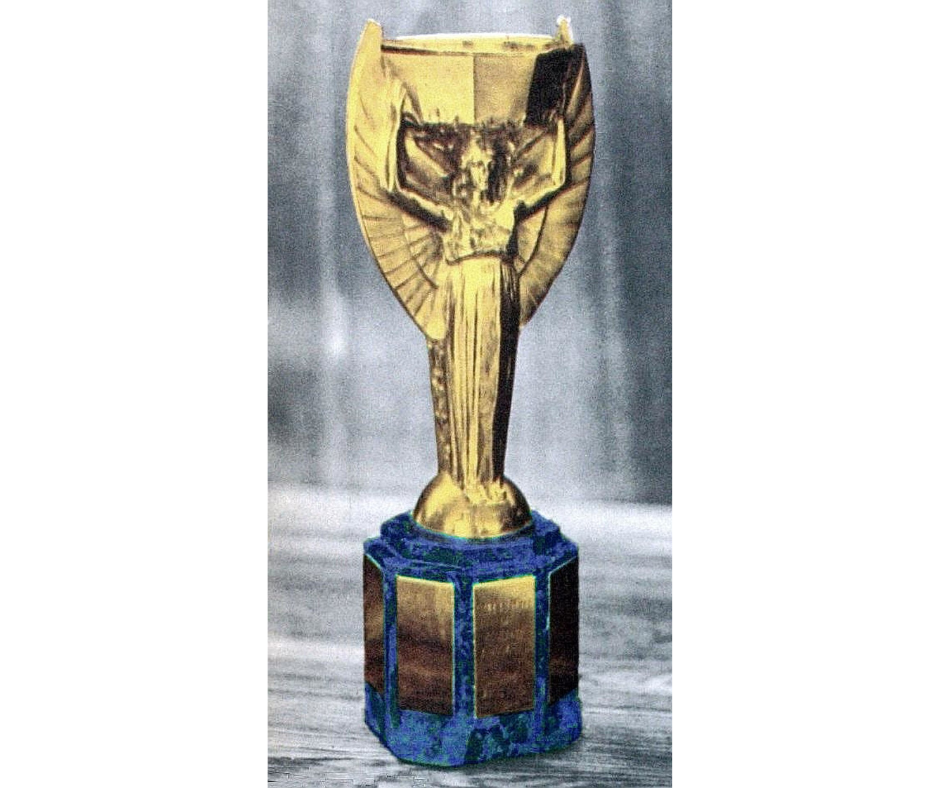
2. New Trophy, New Rules
After Brazil permanently received the Jules Rimet Trophy in 1970, FIFA decided to create a new trophy to represent the football world championship starting in 1974. To do so, it launched an international competition featuring dozens of proposals, though only one captured the universal dimension of football.
Italian sculptor Silvio Gazzaniga created the current FIFA World Cup Trophy design: two human figures lifting the planet, symbolizing victory, unity, and global reach.
Along with the new trophy came new rules. Unlike the Jules Rimet trophy, since 1974 no national team can keep it permanently, regardless of how many championships it wins. This change was made to preserve it as part of FIFA's permanent heritage.
3. It Does Not Belong to the Champion
Since 1974, FIFA has kept the trophy under strict protection. Champions may hold it during the ceremony and celebrate with it on the field and in the locker room, but always under constant FIFA security supervision. Before the winning team leaves the host country, it must return the original trophy to the organization.
Under FIFA custody, the name of the winning national team is engraved on a circular plate located at the base of the original trophy. The traditional engraving process takes place in Milan, Italy, at the workshop of GDE Bertoni, the company that originally manufactured it. Currently, there is space for the names of champions through the 2038 World Cup.
After the engraving, the original trophy returns to its armored display case at the FIFA World Football Museum in Zurich, Switzerland, where it remains under strict security. The winning country receives an exact replica made of bronze and coated in gold, which it can keep permanently in its trophy cabinet.
4. Solid Gold?
The trophy is made of 18-karat gold. It stands 36.8 centimeters tall, weighs 6.175 kilograms, and contains approximately 4.9 kilograms of pure gold. Its base includes green malachite, a semiprecious stone that enhances its uniqueness.
Although FIFA officially refers to it as “solid gold” to indicate that it is not merely gold-plated over another metal, its internal structure is actually hollow. If the trophy were completely solid gold, it would weigh between 70 and 80 kilograms due to gold’s high density. That would make it practically impossible for players to lift it during celebrations.
Who Has Dominated It?
Since 1974, Germany and Argentina lead the list with three titles each. Italy, Brazil, and France have two each, while Spain has one. From 1974 through 2025, Europe has surpassed South America in total number of victories.
The FIFA World Cup Trophy is history, symbolism, and transcendence. It is made of gold, but its true value is not measured in karats — it is measured in the passion it inspires in millions of fans around the world. Unlike other objects made of precious metal, this trophy cannot be bought or inherited: it must be conquered.
Protect Your Savings
Aktagold helps individuals worldwide protect their wealth from economic instability by providing access to savings in physical gold, stored in high-security vaults at the Royal Canadian Mint® in Ottawa (Canada), offering a level of protection once reserved for the wealthiest investors.


